---
title: Logistics Cost Says No. The P&L Says Yes. | YDISTRI
description: Moving stock costs 2 to 5%. The markdown it prevents costs 40 to 50%. Why logistics KPIs block a margin-positive decision, and who owns the gap.
image: https://ydistri.com/hubfs/resources/invisible-sales/YDISTRI_invisible-sale_KPI-ok_margin-bleeding_1200x630px.png
---
[Y′interview: CRC Sports reduced in-store out-of-stocks by about 50%. The redistribution adds around THB 5 million in incremental gross profit.](https://ydistri.com/blog/crc-sports-reduced-out-of-stocks-by-50-percents-without-buying-additional-stock)
[Y′interview: CRC Sports reduced in-store out-of-stocks by about 50%. The redistribution adds around THB 5 million in incremental gross profit.](https://ydistri.com/blog/crc-sports-reduced-out-of-stocks-by-50-percents-without-buying-additional-stock)
[Y′interview: CRC Sports reduced in-store out-of-stocks by about 50%. The redistribution adds around THB 5 million in incremental gross profit.](https://ydistri.com/blog/crc-sports-reduced-out-of-stocks-by-50-percents-without-buying-additional-stock)
[Y′interview: CRC Sports reduced in-store out-of-stocks by about 50%. The redistribution adds around THB 5 million in incremental gross profit.](https://ydistri.com/blog/crc-sports-reduced-out-of-stocks-by-50-percents-without-buying-additional-stock)
[Y′interview: CRC Sports reduced in-store out-of-stocks by about 50%. The redistribution adds around THB 5 million in incremental gross profit.](https://ydistri.com/blog/crc-sports-reduced-out-of-stocks-by-50-percents-without-buying-additional-stock)
[Y′interview: CRC Sports reduced in-store out-of-stocks by about 50%. The redistribution adds around THB 5 million in incremental gross profit.](https://ydistri.com/blog/crc-sports-reduced-out-of-stocks-by-50-percents-without-buying-additional-stock)
- [Y′solution](https://ydistri.com/solution)
- [Y′platform](https://ydistri.com/platform)
- [Y'myths](https://ydistri.com/retail-myths-that-are-eating-your-margin)
- [Y′resources](https://ydistri.com/resources)
- [About](https://ydistri.com/about)
- *Search*
- [Book a demo](https://ydistri.com/book-a-demo)
- [Y′blog](https://ydistri.com/blog)
# Logistics Cost Says No. The P&L Says Yes.
- [Articles](https://ydistri.com/resources/tag/articles)
- 24/8/2026
- Written by Roland Dzogan
I was in a meeting with a department store. The numbers were clear. The ROI case was strong. Everyone in the room agreed with the analysis.
Then the controller said: we cannot adopt this, it adds about 3% of inventory moved to our logistics cost.
And the meeting ended.
Not with an argument. Not with a counter-proposal. It ended the way these meetings usually end, because nobody in the room had a mandate to trade one department's cost against another department's loss.
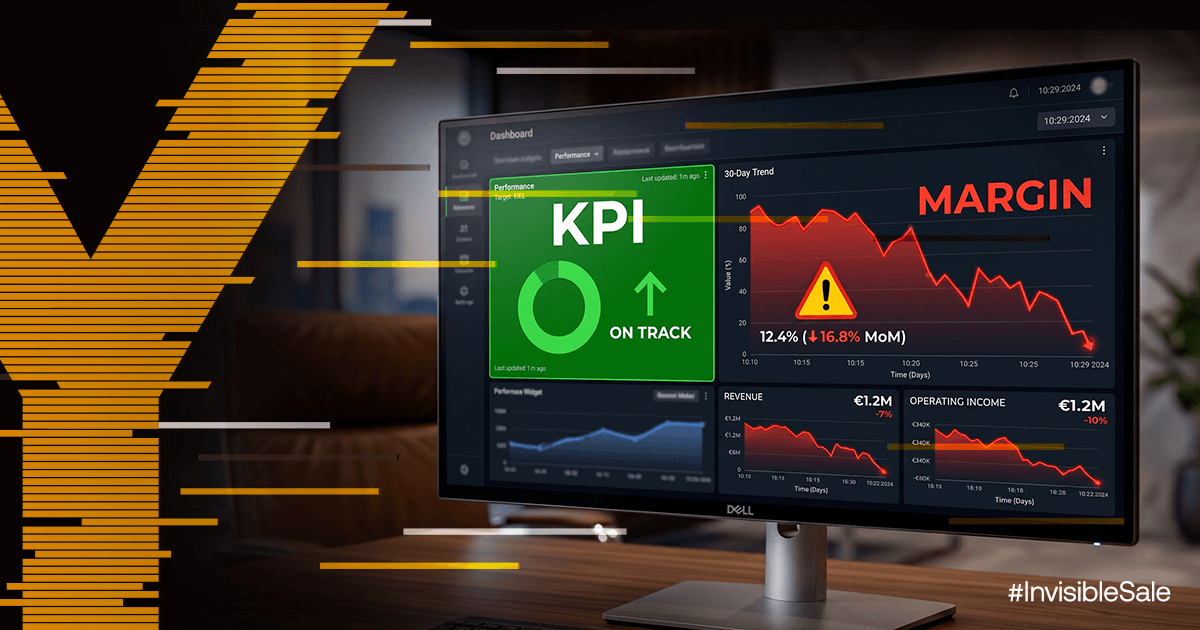
The issue was never logistics. It was KPI design.
## The metric was doing exactly what it was built to do
Logistics performance is measured as cost against inventory moved. It is a sound metric. It stops unnecessary movement, it exposes inefficient routing, and it gives a logistics director a number they can defend.
It also means that every redistribution proposal, regardless of what it returns, arrives on that dashboard as a cost increase and nothing else.
The return does not appear there. It cannot. The margin protected by moving stock lands in merchandising or in finance, months later, as a markdown that never happened. There is no field for a loss you avoided.
So the controller was not being obstructive. He was reading his own scoreboard correctly and protecting a number he is accountable for. The organisation optimised the metric. The P&L paid for it.
This is the trap: a local dashboard stays healthy, the total result deteriorates, and no single person owns the gap between them.
## The loss does not disappear. It relocates.
Declining the transfer does not resolve anything. It moves the problem somewhere the logistics KPI cannot see it.
Slow movers accumulate in the stores where they were never going to sell. They hold shelf space for weeks. They come under pressure at the end of the season, and then they clear at 40 to 50% off, which is the point at which the loss finally becomes visible.
By then it is booked as a markdown. It shows up in merchandising, or in finance, or gets absorbed quietly as end-of-season. It is never traced back to the meeting where a 3% cost was declined.
That is what makes this failure so durable. The two numbers are real, both are measured, and they sit on separate dashboards owned by separate people. Neither person is doing anything wrong. The trade-off between them simply has no home.
## The arithmetic is not close
Across YDISTRI implementations, the logistics cost of second allocation runs at 2 to 5% of the value moved. The markdowns it prevents run at 40 to 50%.
Second allocation is the corrective layer that runs after the initial distribution has filled the stores, moving stock store-to-store so the right product sits where demand has already appeared. It is not additional buying. It is a correction applied to inventory the retailer already owns.
At [DOUGLAS](https://ydistri.com/douglas-interview), 97% of the avoided markdown cost is retained as margin. The program runs on the remainder. That ratio is the whole argument, and it is the number the logistics dashboard will never display.
Put the two figures side by side and the decision is not finely balanced. Pay a single-digit percentage to move the stock, or surrender roughly half its value to clear it where it sits. The reason this still gets declined has nothing to do with the arithmetic. It has to do with which line the cost lands on and who signs for it.
## Who owns the trade-off
The fix is not a better argument in the meeting. It is putting both numbers in front of the same person.
When logistics cost and markdown loss appear on one dashboard, the conversation changes shape immediately. The question stops being whether to increase logistics spend and becomes which of two costs the business would rather carry. That is a question a retailer can actually answer.
So the question I would put to anyone running a store network: do you track logistics cost and markdown loss on the same report? If you do not, then the trade-off between them is being made anyway, every season, by people who can only see one side of it.
The Invisible Sale is Roland Dzogan's series on the sales and margin failures that hide before classic retail metrics notice them.
### Retail as it actually works
Roland Dzogan is the founder and CEO of YDISTRI. He writes on LinkedIn about how retail organisations measure themselves, and about the decisions those measurements quietly rule out. Observations from client work, published as they happen.
[Follow Roland on LinkedIn](https://www.linkedin.com/in/roland-dzogan-571532a/)
### View Next
## Y′platform **See in action. Book a demo.**
Book a demo
## Stay on top of the latest trends
Subscribe to receive a Y′monthly digest of our most valuable
resources like articles, whitepapers and case studies.
- [](https://www.linkedin.com/company/ydistri)
- [](https://www.youtube.com/@YDISTRI1)
- [](https://twitter.com/ydistri1)
- 
#### Y′resources
- [Y′case studies](https://ydistri.com/books)
- [Y′knowledge base](https://ydistri.com/knowledge-base)
- [Y′blog](https://ydistri.com/blog)
- [Y′podcast](https://ydistri.com/podcast)
#### Our product
- [Y′solution](https://ydistri.com/solution)
- [Y′platform](https://ydistri.com/platform)
#### Company
- [About](https://ydistri.com/about)
- [Y′career](https://ydistri.com/careers)
- [Y′contact](https://ydistri.com/contact)
- [Y′press kit](https://ydistri.com/ypress-kit)
- [Privacy policy](https://ydistri.com/privacy-policy)
- [Cookies policy](https://ydistri.com/cookies-policy)
- [Career policy](https://ydistri.com/careers-policy)

```json
{
"@context" : "https://schema.org",
"@type" : "BlogPosting",
"author" : {
"@type" : "Person",
"name" : "Roland Dzogan",
"url" : "https://ydistri.com/blog/author/roland-dzogan"
},
"dateModified" : "2026-08-24T13:07:56.652Z",
"datePublished" : "2026-08-24T09:59:59.000Z",
"headline" : "Logistics Cost Says No. The P&L Says Yes.",
"image" : [ "https://ydistri.com/hubfs/resources/invisible-sales/YDISTRI_invisible-sale_KPI-ok_margin-bleeding_1200x630px.png" ],
"mainEntityOfPage" : {
"@id" : "https://ydistri.com/blog/logistics-cost-says-no-the-pl-says-yes",
"@type" : "WebPage"
},
"publisher" : {
"@type" : "Organization",
"logo" : {
"@type" : "ImageObject",
"url" : "https://ydistri.com/hubfs/assets/images/_v2/logo/logo-dark.svg"
},
"name" : "YDISTRI, SE."
}
}
```
```json
{
"@context" : "https://schema.org",
"@type" : "VideoObject",
"contentUrl" : "https://26114575.fs1.hubspotusercontent-eu1.net/hubfs/26114575/video_assets/458429761760/inherited/web_optimized.mp4",
"dateModified" : "2026-08-24T08:49:00.482Z",
"duration" : "PT12S",
"height" : 1080,
"name" : "KPI healthy_margin bleeds_b",
"thumbnailUrl" : "https://26114575.fs1.hubspotusercontent-eu1.net/hubfs/26114575/KPI%20healthy_margin%20bleeds_b.webm/medium.jpg",
"uploadDate" : "2026-08-24T08:48:56.528Z",
"width" : 1920
}
```