Both sides sign it believing they have protected themselves. In practice, the arrangement often produces the outcome it was designed to prevent, and it does so where neither party is looking.
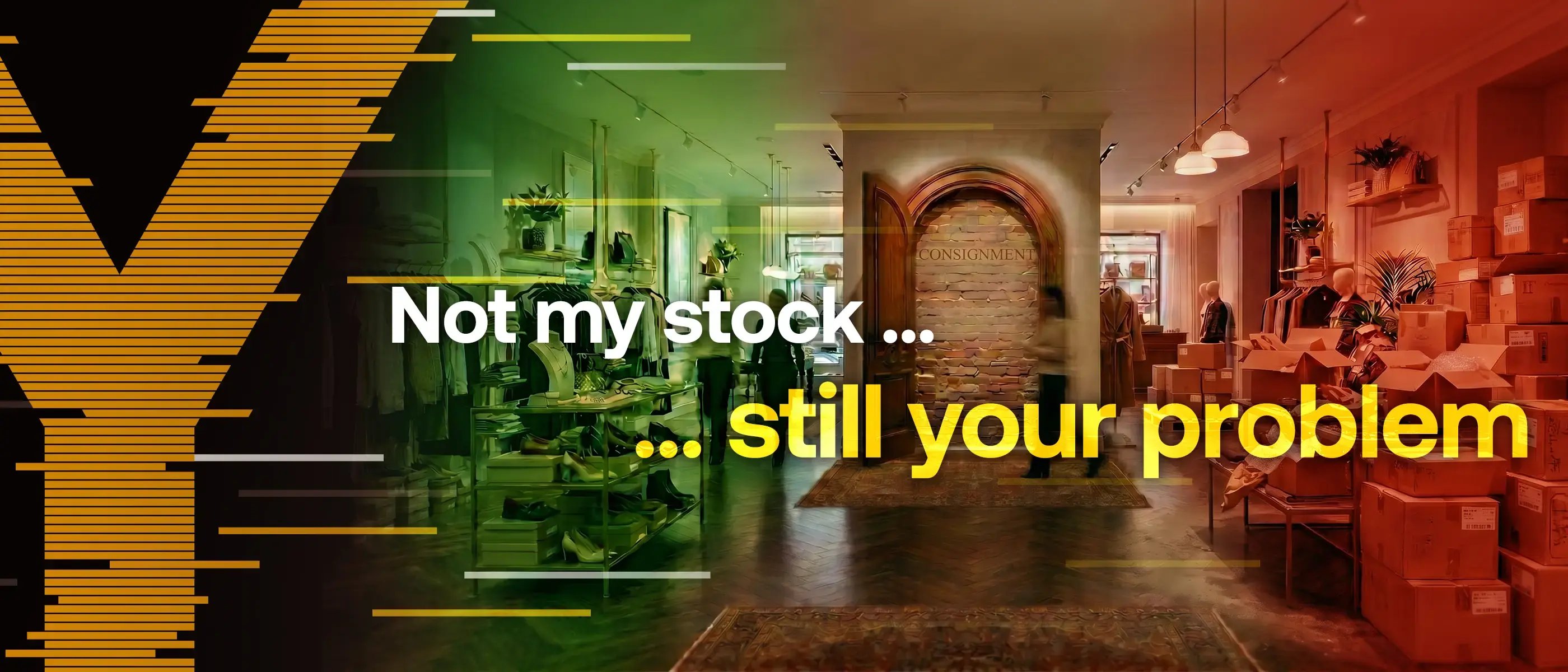
On paper, consignment is a clean piece of risk engineering.
The retailer does not own the stock. The supplier carries the financial exposure. If the product does not sell, it goes back. The retailer gets assortment breadth without tying up capital, and the supplier gets shelf space.
Risk moved. The cost stayed.
Because the retailer carries no formal inventory risk, unsold consignment product attracts no urgency. Nobody is measured on how fast it turns. Nobody questions whether it has earned the space it occupies. There is no write-off waiting at the end of the season to force the issue, so the stock sits, and sitting is free as far as any report is concerned.
The supplier, meanwhile, is often operating with limited visibility into what is actually happening during the season. Which stores are selling. Which are overstocked. Where the product went out of stock and stayed that way. Where demand appeared and was never met.
By the time the goods come back at the end of the season, the answers have stopped mattering. The product returns as dead stock: inventory that has stopped selling where it sits and will be written off or marked down, because the selling window it needed has closed.
So the paradox holds. Consignment was built to protect the retailer from inventory risk, and the retailer still pays. Just not in a currency the contract accounts for.
What a shelf actually costs
A premium retail location is one of the most expensive spaces a business operates. Rent, staff, fit-out, and footfall all resolve into a cost per square metre that the retailer pays whether the product on it moves or not.
When slow consignment stock holds that space, the cost is real and continuous. Better-performing products lose facings. The assortment the customer sees is less relevant than the assortment the retailer could have shown. Sales that would have happened do not.
None of that appears as a loss anywhere. There is no line item for the margin a shelf failed to generate. The retailer's inventory report shows nothing, because it is not their inventory. The supplier's report shows the units are placed, because they are.
Both parties are looking at accurate data. Neither is looking at the same shelf.

Ownership was never the variable
The question of who holds title to the stock does not change the economics of where it is standing. If the wrong product is in the wrong store, both sides lose, and the contract only determines how the loss is split afterward.
The variable that matters is movement during the season, while there is still time for it to change anything.
That means store-level sales visibility for both parties, and the ability to act on it. Second allocation is the corrective layer that runs after the initial distribution has filled the stores, moving stock store-to-store so the product sits where demand has already appeared. Applied in-season, it treats a slow store as a placement question rather than a demand verdict, and it does so while the product still has selling life left.
The effect is measurable. At Fressnapf, stock-days in sending stores fell from 471 to 108, and dead stock across the network fell by 34%. That is the same inventory, bought at the same price, released from the locations where it had stopped moving and put in front of demand that already existed.
Stock that moves in-season is stock that does not come back unsellable in January. The supplier recovers revenue instead of returns. The retailer recovers shelf productivity instead of holding space for a product neither side was watching.
The question worth asking before the next season
Consignment is not a bad instrument. It solves a genuine capital problem, and for many categories it is the right structure. The failure is not the contract. It is treating the contract as though it settled the inventory question, when all it settled was the accounting.
So the question I would put to both sides of a consignment relationship: during the season, who is looking at store-level performance and who has the authority to move something based on what they see? If the honest answer is nobody, then the arrangement is not managing inventory risk. It is deferring it.
Because in physical retail, shelf space is never free. Unsold inventory always carries a cost, including when it belongs to someone else.
The Invisible Sale is Roland Dzogan's series on the sales and margin failures that hide before classic retail metrics notice them.
The same stock. A different location. A different result.
Retailers using YDISTRI recover full-price sales from inventory they already own, without buying anything new. Manor cut write-offs by 30%. Smart & Final cut dead stock value by 52%. Rossmann covered up to 41% of supplier-shortfall orders from stock it already held.